Ankle Foundations for Track & Field
Ankle flexibility is the starting point, not the finish line. Track athletes need range they can control: mobility to reach clean positions, strength and stability to hold them under force, and spring to rebound quickly.
01 What a track ankle needs
Flexibility opens the position. Strength owns it. Stability protects it. Spring turns it into speed.
Mobile
Enough range to squat, sprint, jump, and land cleanly without the heels lifting or the feet turning out.
Strong
Able to control force through that range. Range without strength is just flop.
Stable
Stays organized under load — no wobbling, collapsing, or rolling.
Springy
Absorbs force and rebounds fast. The ankle, calf, and Achilles act like one elastic spring.
02 What's actually in there
The 'ankle' is shorthand for a stack of structures all doing different jobs. Knowing which one a drill is loading turns the program from a list of exercises into something you can actually reason about.
Bones (the hinge)
Three bones meet to form the ankle. The tibia and fibula sit on top; the talus sits between them. Where they meet (talocrural joint) is the hinge that produces dorsiflexion and plantarflexion. Just below it (subtalar joint) is what lets the foot roll in and out.
- Tibia Main shin bone — carries most of the load through the leg into the talus.
- Fibula Smaller outer bone — anchors the lateral ligaments and muscles.
- Talus Sits between the tibia/fibula and the heel bone — the keystone of the ankle.
Ligaments (passive stability)
Short, stiff connective tissue that holds bone to bone. They're what stops the ankle from rolling — and what tears in a typical sprain.
- ATFL / CFL / PTFL Lateral ligaments on the outside — the ones that go in a classic 'rolled ankle.'
- Deltoid ligament Strong fan-shaped ligament on the inside of the ankle — resists overpronation.
- Spring ligament Sits under the talus — supports the arch from below.
Muscles + tendons (active power)
Muscles generate force. Tendons transmit it — and on every running stride, store and return it like springs.
- Gastrocnemius Big two-headed calf muscle. Crosses both knee and ankle. Plantarflexes (points the foot).
- Soleus Deeper calf muscle, ankle only. The workhorse of sprinting — handles most of the propulsive force at high speeds.
- Achilles tendon Common tendon of the gastroc + soleus. The single most important elastic spring in the lower leg.
- Tibialis anterior Front-of-shin muscle. Pulls the foot up (dorsiflexion). Often weak in athletes who get shin splints.
- Tibialis posterior Deep posterior muscle. Main dynamic arch support — controls excessive pronation.
- Peroneals (fibularis longus & brevis) Outside of the lower leg. Evert the foot and resist rolling — active lateral stabilizers.
- Intrinsic foot muscles Small muscles inside the foot. Control arch height, toe spread, and fine balance.
Fascia (the wrapper that springs)
Sheets of dense connective tissue that wrap muscles and link them up the chain. Underrated for elastic return.
- Plantar fascia Runs heel to forefoot. Acts like a bowstring — toe extension at push-off snaps the foot rigid (the 'windlass mechanism').
- Crural fascia Wraps the lower leg and links calf to hamstring up the posterior chain. Part of the elastic return system.
Mapped back to the four qualities:
| Quality | Mostly responsible |
|---|---|
| Mobile | Talocrural joint glide · gastrocnemius and soleus length · joint capsule mobility |
| Strong | Gastroc · soleus · tibialis anterior/posterior · peroneals · intrinsic foot muscles |
| Stable | Lateral ligaments (ATFL/CFL) · deltoid · peroneals (active) · proprioception |
| Springy | Achilles tendon · plantar fascia · crural fascia · gastroc/soleus muscle-tendon unit |
03 Why dorsiflexion matters
Dorsiflexion is the ankle motion that lets the shin move forward over the foot while the heel stays down. It shows up in every squat, start, takeoff, landing, and cut. When it's limited, the body finds another way — and that's where stride mechanics, knees, and backs start paying the price.
| Movement | Why it matters |
|---|---|
| Deep squat / squat sit | Lets the hips drop while the heels stay down. |
| Sprint starts | Lets the shin angle forward into acceleration. |
| Jump takeoff | Loads the ankle, calf, and Achilles together. |
| Landing | Absorbs ground force safely. |
| Cutting / change of direction | Controls the foot, ankle, and knee through the turn. |
When it's limited, the body cheats. Common tells:
| Sign | What it usually means |
|---|---|
| Heels lift in a deep squat | Not enough usable dorsiflexion. |
| Feet turn way out to squat or land | Body is steering around the restriction. |
| Arches collapse under load | Foot is creating fake range. |
| Knees cave inward | Poor control through the foot, ankle, and hip chain. |
| Torso folds forward in the squat | The body is compensating somewhere up the chain. |
04 Quick self-check
A simple, weight-bearing way to see whether ankle dorsiflexion is the thing limiting you. No equipment — just a wall.
The knee-to-wall test
- Stand facing a wall.
- Place one foot a few inches from the wall.
- Keep the heel pinned to the floor.
- Drive the knee toward the wall.
- Track the knee straight over the second or third toe.
Heel stays down. Arch stays controlled. Knee tracks straight over the toes. No sharp pinching in the front of the ankle.
Heel pops up. Foot turns out. Arch collapses. Knee caves in. Front of the ankle pinches.
If this test is limited or feels ugly, ankle dorsiflexion is probably the thing holding back your squats, starts, and landings — and Phase 1 is where to start.
05 Mobility and stiffness aren't opposites
Sprinting and jumping are elastic. Every contact stores force in the ankle, calf, and Achilles, and every push-off returns it. Without stiffness, that elastic energy leaks out of every stride and you have to make up the difference with raw muscle — slower and more fatiguing.
But stiffness only helps if you can hit the position first. An ankle that can’t dorsiflex enough to load a takeoff or angle into a start has nothing to spring out of. So mobility and stiffness aren’t enemies — they’re different tools for different jobs.
| Quality | What it gives you | How it’s trained |
|---|---|---|
| Usable range of motion | The right positions for starts, jumps, and landings | Knee-to-wall rocks · calf and soleus stretches |
| Strength | Control of that range under load | Calf raises · soleus raises · tibialis raises · step-downs |
| Elastic stiffness | Force absorption and quick rebound | Pogos · jump rope · skips · bounds |
Mobility lets you get into the position. Strength lets you control it. Stiffness lets you launch out of it.
Don’t skip the sequence
The phases below are ordered for a reason. New range only sticks if the muscles can produce force inside it — and elastic spring only works if there’s strength underneath it.
- Open the range. Win the dorsiflexion. Earn it daily.
- Own the range. Make it strong, full-range, and durable.
- Make it springy. Train short ground contacts and elastic return.
Run them in order. Don’t bound your way out of a Phase 1 problem.
06 The 3-phase progression
Open the range. Own the range. Make it springy. Each phase has a benchmark for moving on — don't skip ahead.
Phase 1 — Open the range
Win usable ankle range so the body doesn't have to cheat. Daily or near-daily, low intensity, owned positions. Move on once the knee-to-wall test feels clean on both sides.
Knee-to-wall rocks

Standing calf stretch (knee straight)

Soleus stretch (knee bent)

Phase 2 — Own the range
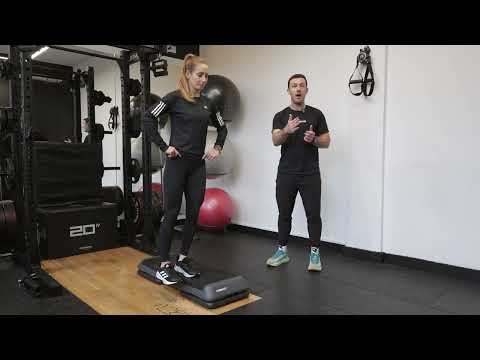
Make the new range durable. Slow, full-range, owned reps. 2–3× per week on lower-body strength days. Move on once you can grind out clean step-downs and full-range bent-knee calf raises.
Calf raises (straight knee)

Bent-knee calf raises (soleus raises)
Tibialis raises

Step-downs
Phase 3 — Make it springy
Short ground contacts, quick rebounds, tall posture. 1–2× per week. Quality over quantity — stop the set the moment contacts get loud, heavy, or slow.
Pogo jumps

Jump rope

A-skips
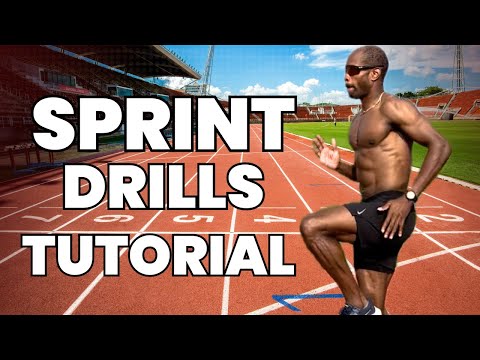
Bounding

07 Stance practice (complementary)
Eastern stance practice — horse stance, bow stance, cat stance, standing post, single-leg holds — pairs unusually well with this program. Not as a replacement for calf raises and pogos, but to fill specific gaps the western drills don't cover well.
The 3-phase program above leans heavily on the big movers (gastrocnemius, soleus, Achilles, tibialis anterior) through dynamic concentric and eccentric reps. That's the right backbone — but it underweights a few things stances are uniquely good at:
Intrinsic foot muscles — the supporting cast
Inside the foot are dozens of small stabilizers — flexor digitorum brevis, abductor hallucis, quadratus plantae, the lumbricals — that control arch height, toe spread, and 'rooting' into the ground. Calf raises don't fire them. Stances do, especially barefoot, because the foot has to actively organize itself under sustained load. These are the muscles that the typical lifted-shoe athlete most under-trains.
Sustained isometric endurance
Calf raises are reps. Horse stance is time. Different fiber recruitment, different adaptation. The slow-twitch postural fibers in the calf, foot, and hip aren't loaded the same way by 12 reps as by 90 seconds of sustained tension.
Postural alignment under load
Most ankle drills isolate one joint. Stances ask the entire chain — feet, knees, hips, spine — to organize together for minutes at a time. That's where alignment gets engrained as a habit instead of a cue.
Proprioception and ankle stability
Single-leg holds and slow weight shifts demand constant micro-corrections from the peroneals, intrinsic foot, and joint receptors. That feedback loop is exactly what reduces sprain risk and underwrites confident landings.
Standing post (zhan zhuang) · 站桩

Horse stance (ma bu) · 马步
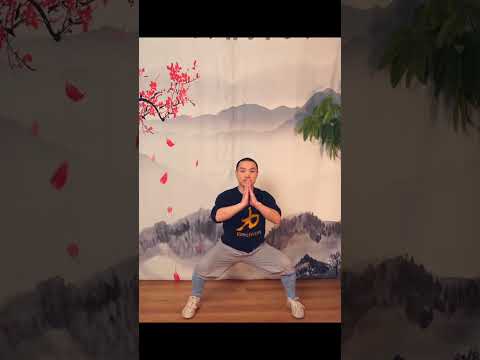
Bow stance (gong bu) · 弓步

Cat stance (xu bu) · 虚步

Golden rooster (jin ji du li) · 金鸡独立

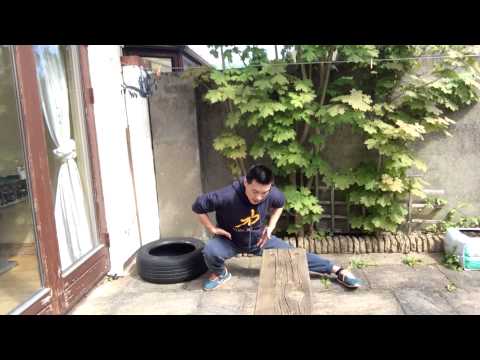
Crouch stance (pu bu) · 仆步
08 A sample week
Mobility can be frequent. Strength needs recovery. Plyometrics need freshness. Here's one way to lay it out.
09 Common mistakes
A few patterns that quietly stall progress — easy to miss, easy to fix once you know what to look for.
Don't only stretch.
Range you can't control disappears under load. Pair every new piece of mobility with strength work in the same range — that's how it sticks.
Don't skip straight to plyometrics.
Pogos, skips, and bounds expose weaknesses fast. If the calf and soleus aren't strong yet, jumping early just reinforces the same compensations at higher speed. Earn the spring.
Don't force the deep squat.
The deep squat is a useful screen, not a competition. Improve the position gradually — never by twisting the feet out, collapsing the arches, or jamming the knees forward.
Don't load up on static stretching right before sprinting or jumping.
Long aggressive stretches before explosive work can briefly cut force production. Use dynamic mobility, skips, pogos, and sprint drills before training. Save longer stretches for after.
Don't ignore pain, pinching, or asymmetry.
A stretching feeling in the calf is normal. Sharp pain, front-of-ankle pinching, repeated rolling, or a clear left-vs-right gap should be checked by a qualified coach, athletic trainer, or sports PT.
Mobile enough to hit the position. Strong enough to own the position. Springy enough to explode out of it. That's a track ankle.