Hip Foundations for Sprinters
Sprinter hips have to open hard in front and finish hard behind. Mobility to reach the position, strength to drive force into it, stability to stay square, spring to turn it into stride length.
01 What sprinter hips need
Flexibility opens the position. Strength owns it. Stability protects it. Spring turns it into speed.
Mobile
Enough hip extension at the back of the stride and enough flexion to drive the knee high in front. Both ends matter.
Strong
Glutes push you forward. Hip flexors recover the leg fast. Adductors stabilize the pelvis. Hamstrings finish the stride.
Stable
Pelvis stays level side-to-side and neutral front-to-back. No hip drop on stance leg, no anterior tilt under load.
Springy
Glutes and hamstrings load and rebound like a band. Force transfers cleanly from the floor through the hip into the trunk.
02 What's actually in there
The hip is a deep ball-and-socket joint with way more range than the ankle — and far more muscles tugging on it from every direction. Knowing which one a drill is hitting turns the program from random exercises into something you can troubleshoot when it isn't working.
Bones (the lever)
The hip is where the femur meets the pelvis at the acetabulum. Compared to the ankle, it's a much deeper socket — more inherent stability, but more depending on the surrounding muscles to control.
- Pelvis (ilium, ischium, pubis) The platform. Transmits force between upper and lower body — and tilts forward, back, or sideways depending on what the muscles do.
- Femur (head and neck) Longest bone in the body. The lever arm the hip muscles work on.
- Acetabulum The socket. Deeper than the shoulder, shallower than the ankle. Allows extension, flexion, abduction, adduction, internal and external rotation.
- Sacrum + SI joints Bridge between spine and pelvis. Slight motion here is normal; pain isn't.
Ligaments (passive stability)
Thick fibrous bands that limit how far the hip can move passively. Mostly do their job invisibly — until they get loaded badly.
- Iliofemoral (Y) ligament Strongest ligament in the body. Limits excessive hip extension — also why the body cheats with lumbar arch when you don't have hip extension.
- Pubofemoral Resists excessive abduction and extension on the inner front of the hip.
- Ischiofemoral Posterior — limits excessive flexion and internal rotation.
- Sacroiliac ligaments Stabilize the SI joint, where load transfers from spine to pelvis.
Muscles + tendons (active power)
The hip has more big muscles around it than anywhere else in the body. Sprinting performance is mostly about whether the right ones are firing in the right pattern.
- Glute maximus The sprint engine. Primary hip extensor — what pushes you forward at toe-off.
- Glute medius + minimus Lateral hip stabilizers. Keep the pelvis level when you're on one leg (every step of running).
- Iliopsoas (psoas major + iliacus) Deep primary hip flexor. Pulls the knee up in the recovery phase of the stride.
- Rectus femoris Front of the thigh. Crosses both hip and knee — flexes hip + extends knee. Big sprinter injury site.
- Hamstrings (biceps femoris, semitendinosus, semimembranosus) Back of the thigh. Extend the hip and flex the knee. Biarticular and explosive in sprinting — also the most common pull.
- Adductors (longus, brevis, magnus, gracilis, pectineus) Inner thigh group. Pull the leg toward midline AND stabilize the pelvis. Weak adductors = recurring groin strain.
- Deep external rotators (piriformis, gemelli, obturators, quadratus femoris) Small but critical rotational stabilizers. Control how the femur tracks in the socket.
- TFL (tensor fascia latae) Small muscle at the front-outside of the hip. Often overactive when the glute med is underactive.
Fascia (the connective wrapper)
Sheets that link the hip muscles to the structures above and below — far more important to sprint mechanics than usually credited.
- IT band (iliotibial band) Thick fascial band from iliac crest to lateral knee. Gets blamed for a lot of things that are actually glute med weakness.
- Thoracolumbar fascia Big sheet on the lower back that links glute max to the opposite-side lat. Critical for cross-body force transfer in running.
Mapped back to the four qualities:
| Quality | Mostly responsible |
|---|---|
| Mobile | Hip capsule glide · iliopsoas + rectus femoris length · adductor length · joint capsule mobility |
| Strong | Glute max · glute medius · iliopsoas · hamstrings · adductors |
| Stable | Glute med + min · deep external rotators · adductors (active stability) · TLF chain |
| Springy | Glute max + hamstring stretch-shortening cycle · thoracolumbar fascia · biarticular muscles (rectus femoris, hamstrings) |
03 Why hip extension matters
Hip extension is the part of the stride where the back leg pushes you forward. It's how you turn glute strength into ground force. When extension is limited — usually from tight hip flexors, weak glutes, or both — the body cheats by tilting the pelvis forward and using the lower back instead. Same stride, totally different mechanics.
| Movement | Why it matters |
|---|---|
| Toe-off / stride finish | Full hip extension is what actually pushes the body forward. |
| Knee drive / recovery | Hip flexion brings the leg back through fast — drives stride frequency. |
| Acceleration | Big horizontal force needs glutes producing extension at depth. |
| Top-speed sprinting | Pelvis stays level, hips stay neutral, no energy leaks sideways. |
| Cutting / change of direction | Glute med and deep rotators control the pelvis and femur in the frontal and transverse planes. |
When it's limited, the body cheats. Common tells:
| Sign | What it usually means |
|---|---|
| Lower back arches in hip flexor stretches | Body is stealing extension from the lumbar spine instead of the hip. |
| Hip drops on the stance leg when running or doing single-leg work | Glute medius (and the lateral hip system) isn't keeping the pelvis level. |
| Glutes don't fire in deadlifts or hip thrusts — back gets pumped first | Glute amnesia. The bigger movers downstream are taking over. |
| Adductor tightness or strains keep recurring | Pelvic instability + weak adductors. The adductors are stabilizers, not just movers. |
| Knee caves inward on jumps or lunges | Hip control issue more than knee issue. Trace it up the chain. |
| Overstride and heel-strike on faster running | Limited hip extension is letting the front leg reach instead of the back leg pushing. |
04 Quick self-check
A standard hip flexor screen. Lying on your back, you let one leg hang while pulling the other knee to your chest. The position of the hanging leg tells you where you're tight.
The modified Thomas test
- Lie on your back at the edge of a bed, bench, or sturdy table — hips at the edge.
- Pull both knees in toward your chest.
- Hold one knee firmly to your chest (locks the pelvis).
- Let the other leg hang off the edge, fully relaxed.
- Check three things: thigh height, knee bend, whether the leg drifts out.
Hanging thigh rests at or below horizontal. Knee bends to about 90°. Leg hangs straight down — not pulled out to the side.
Thigh stays above horizontal (tight iliopsoas). Knee extends out toward straight (tight rectus femoris). Leg drifts out laterally (tight TFL or IT band).
Each of those tells you what to prioritize in Phase 1. High thigh → couch stretch + psoas-focused mobility. Knee won't bend → quad stretches. Leg drifts out → TFL release plus glute med strength.
05 Tight hip flexors are usually weak glutes in disguise
Hip flexors that won’t release are usually hip flexors that are holding on. The body locks down the front of the hip when the back of the hip — the glutes — isn’t doing the work it’s supposed to do.
So the problem with most “tight hip” programs is that they only treat one side of the equation. Stretching tight hip flexors without firing the glutes is like turning down the volume on a stuck radio — five minutes later it’s back. The brain only releases the flexors when it trusts the glutes to take over the job.
That’s why this lesson runs in a specific order:
| Phase | What it’s training | Why this order |
|---|---|---|
| Phase 1 — Open the range | Hip flexor + capsule length, joint glide | Earn the room to move |
| Phase 2 — Own the range | Glutes, hamstrings, adductors, deep rotators | Give the brain a reason to keep the room |
| Phase 3 — Make it springy | Stretch-shortening cycle, stride mechanics | Use the new room at speed |
Don’t skip the sequence
The biggest mistake sprinters make with hip work is mobility-only. They stretch, they stretch, they stretch — and they get tighter the harder they train, because all that ground force is loading hips that aren’t strong enough to absorb it. Strengthen what you opened. The mobility will stick.
06 The 3-phase progression
Open the range. Own the range. Make it springy. Each phase has a benchmark for moving on — don't skip ahead.
Phase 1 — Open the range
Win usable hip extension and flexion. Daily or near-daily, low intensity, owned positions. Move on once you can hold a kneeling hip flexor stretch with a square pelvis (no back arch) and the 90/90 transition feels controlled.
90/90 hip stretch

Kneeling hip flexor stretch

Hip CARs (controlled articular rotations)
Phase 2 — Own the range
Make the range strong and durable. Glute max for extension, glute med for pelvic control, adductors for stability, hamstrings for the back of the stride. 2–3× per week.
Barbell hip thrust

Single-leg Romanian deadlift
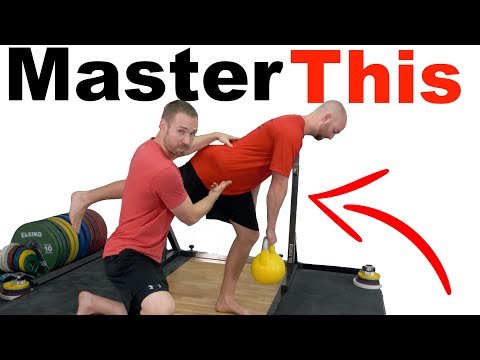
Copenhagen plank

Lateral band walks

Phase 3 — Make it springy
Turn hip strength into elastic force production. Short ground contacts, full hip extension, big knee drive. 1–2× per week.
A-skips
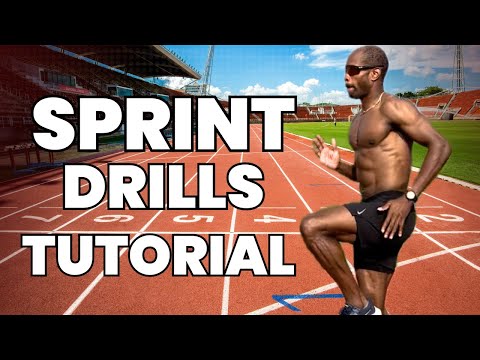
B-skips

Broad jumps
Bounding

07 Stance practice (complementary)
Same six eastern stances as the ankle lesson, but for the hip the gap they fill is different. The 3-phase program above hits the big movers — glutes, hamstrings, adductors. What it touches less is what stances are uniquely good at:
Western hip work is great at producing force in straight planes (sagittal extension, frontal-plane abduction). It tends to miss:
Deep external rotators — the supporting cast
The piriformis, gemelli, obturators, and quadratus femoris are small rotational stabilizers that don't get hit by hip thrusts or RDLs. They control how the femur tracks in the socket — exactly what gets sloppy under fatigue. Stance holds in rotated positions (especially 90/90 and bow stance) fire them directly.
Sustained pelvic alignment
Hip thrusts and RDLs are reps. Horse stance and bow stance are time. Different fiber recruitment — and the postural fibers around the hip mostly only adapt to sustained load. That's the difference between hip strength and hip endurance.
Asymmetric loading without machines
Bow stance and cat stance ask the body to organize through a long, weight-shifted position with nothing to hold onto. That kind of loaded asymmetry is the closest static analog to single-leg sprint mechanics.
Proprioception in the deep hip
Single-leg stance work (golden rooster) demands constant micro-corrections from the deep rotators and adductors. That feedback loop is exactly what underwrites confident cuts and sharp directional changes.
Standing post (zhan zhuang) · 站桩

Horse stance (ma bu) · 马步
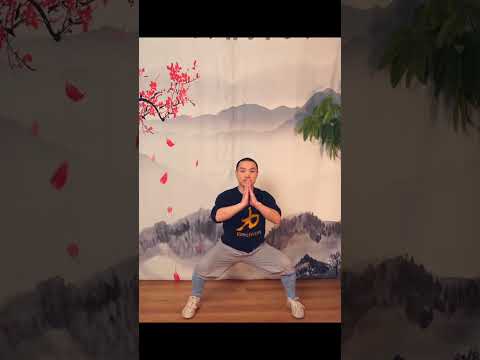
Bow stance (gong bu) · 弓步

Cat stance (xu bu) · 虚步

Golden rooster (jin ji du li) · 金鸡独立

Crouch stance (pu bu) · 仆步
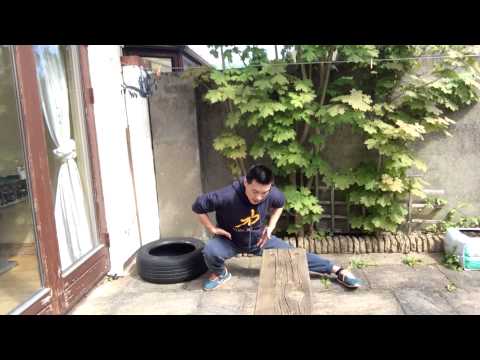
08 A sample week
Mobility can be frequent. Strength needs recovery. Plyometrics need freshness. Here's one way to lay it out.
09 Common mistakes
A few patterns that quietly stall progress — easy to miss, easy to fix once you know what to look for.
Don't only stretch hip flexors.
Hip flexors that won't release are usually hip flexors that are holding on because the glutes aren't doing their job. Stretch them — then immediately fire the glutes with a hip thrust or kneeling stretch with active glute squeeze. Pair the release with the strengthening; the brain only lets go when the alternative is online.
Don't confuse anterior pelvic tilt with hip extension.
Many athletes 'extend' their hip by tilting the pelvis forward and arching the lower back. That hides a lack of true hip extension. Cue: ribs down, glutes squeezed, pelvis level — the hip itself should be opening, not the spine.
Don't skip adductor work.
Recurring groin strains in sprinters are almost always weak adductors and poor pelvic control, not 'tightness.' Stretching the adductors of a sprinter with strain history will make it worse. Strengthen first.
Don't ignore single-leg work.
Sprinting is single-leg, hopping is single-leg, cutting is single-leg. Bilateral lifts are great backbone work, but if you can't do clean single-leg RDLs and step-ups, the bilateral strength leaks under speed.
Don't force hip mobility without strength.
End-range hip mobility without the strength to control it is a recipe for impingement, labral irritation, and SI joint pain. Open the range with care; own the range with intent.
Don't ignore pain, clicking, or sharp pinching.
Hip clicking that hurts, sharp groin pinching at the front of the hip during squats or sprints, or a dull deep-glute pain that won't quit is worth getting checked by a sports PT. The hip can hide problems for a long time before they speak up clearly.
Mobile enough to drive the knee high and finish the stride low. Strong enough to push the ground away. Stable enough to keep the pelvis level. That's a sprinter's hip.